I named this blog after Kali, the Hindu goddess of time because I recognize that while some learnings happen immediately, some need time to “stew”.
As I mentioned today, there is a Sanskrit saying that we learn 25% from our teachers, 25% from our peers, 25% we figure out ourselves and 25% we learn over time. So in addition to reviewing today’s presentation, I invite you to come back and look around anytime as your studies and contemplations brew.
As well, here are a few additional resources for you:
The Cambridge Introduction to Sanskrit is the best introductory text I have come across and is recommended for use in the Sanskrit classes at the U of A. At the link above you will find free alphabet charts, videos, worksheets and more.
Yoga Sutras in Devanagari and Transliterated Sanskrit from the Arlington Centre is a free PDF of the full Yoga Sutras of Patanjali with the diacritical marks. I’m not saying this is the “best” translation, but I do find the format and language approachable and helpful.
In addition to PAC classes, The University of Alberta offers courses related to yoga in the departments of History, Philosophy and Religion. We have extraordinary scholars on faculty and I encourage you to explore this subject further.
Thank you for attending and sharing with me today, it was a joy to spend time with you!
Here are some links to further whet your appetite for the Language and Literature of Yoga.
There are many more resources collected here in Kali's Kitchen. Make yourself at home.
As one of the most important symbols of yoga, Om is a whole subject in and of itself. As a starting point, you may like to read this Kali's Kitchen post on The Meaning of Om.
The Cambridge Introduction to Sanskrit is the best text I've seen on the subject and is the text used in the University of Alberta's Sanskrit courses. You can find alphabet charts, sample chapters, practice sheets, and more here.
Here you can contemplate more of the Vedantic Nyayas or metaphors about illusion (maya) and reality, like the examples I gave of "The Rope and the Snake" (Rajjusarpa-Nyaya) and "Water off a Lotus Leaf" (Padmapatra-Nyaya).
And most importantly for your studies, here is a previous post with a full and detailed recap of my lecture.
Thank you for this opportunity! Best wishes on your path!
Over the 20+ years I've been teaching yoga, some aspects of the practice have become mainstream. Others are still terribly hard to come by.
If you're serious about learning Sanskrit in Edmonton, your time has come!
This fall at the University of Alberta starting September 3, 2019, you can study Sanskrit with Dagmar Wujastyk, an Indologist with specialties in the History of Yoga and Ayurveda.
Classes will be held Tuesday-Friday from 10-10:50 am. For more information online visit Beartracks or contact the Office of the Registrar.
Sandstone Linga, Central India ca. 900 CE Image Source
Namaste, PAC 156!
Please click here for today's guest lecture notes on the Language and Literature of Yoga.
There are many aspects to the yogic path, including and beyond the postures. Familiarity with the foundational texts and the original language of yoga can enrich your enjoyment of the practice immensely.
Best wishes for your continued curiosity about all things yoga!
Sanskrit is the primary classical language of India and the source language of Yoga.
The word Sanskrit means "perfected" or "refined" and has a rich tradition of creative, scientific, philosophical and religious literature.
Although it is no longer widely spoken on a daily basis, it is used as a ceremonial language and is present (at least sporadically) in the vocabulary of most modern yoga practices.
The beautiful script pictured above is known as Devanagari.
Transliteration vs. Translation Transliteration is the transposing of sounds in one language into the script of another. The use of standardized diacritical marks allows for the accurate representation of sounds unique to a language.
When using Sanskrit terms diacritical marks are necessary to indicate sounds which do not exist in English. Unfortunately, they are inconsistently used in modern Yoga books and websites which can make pronouncing Sanskrit words difficult.
Translation is the act of converting the words of one language into the words of another to facilitate the comprehension of meaning.
In yoga, the original Sanskrit terms are often so nuanced, that it takes multiple words, sentences or even paragraphs in other languages to convey their connotation and intention.
Sanskrit in Modern English English is a member of the Indo-European language family, one of several descendants of Sanskrit.
Many common words in English (jungle, pajama, avatar, suture, bandana, shampoo, cashmere, ganja, jugular etc.) are derived from Sanskrit.
Many Sanskrit terms specific to yoga are familiar to modern yogis in their original language through the names of postures, authors, and texts.
Because their meanings can be obscured in translation, the original terms (asana, ashram, guru, swami, karma, mantra, mandala etc.) have been adopted.
Hints for Pronouncing Sanskrit Words and Names
Here are a few basic tips for reading and pronouncing Sanskrit:
- Sanskrit is a phonetic language. There are no silent letters, and each letter makes just one sound.
- The transliterated letter "a" is pronounced like "up" rather than "at". If there is a horizontal line above the "a" (ā) it indicates a long "aa" sound. In the example, Saṃsāra, we see two short and one long vowel.
- There is a short "a" sound following each consonant unless modified by other vowel sounds as in the word yoga.
- Sanskrit features unaspirated and aspirated consonants ("b" vs. "bh" and "t" vs. "th" etc.).
- Sanskrit has no voiceless or voiced digraph "th" sound, as in "think" or "this". Therefore the word "Hatha" (haṭha) is pronounced: "Ha-tha" ("hu" similar to "hut" + "tah" similar to "Utah", "t" with aspiration) as opposed to the common mispronunciation, "Ha" (as in hat) "tha" (as in thug).
- Transliterated "c" will always sound like English "ch" as in "church". This "ch" sound may also be aspirated, sometimes indicated with an extra "c" or followed by "h".
- Sanskrit contains retroflex consonants produced with the tongue curled to the roof of the mouth. Such sounds are absent in English and present a challenge for native English speakers.
- Long words are frequently compounds of two or more short words. Knowing some words that appear frequently in yoga vocabularies such as asana meaning "posture", pada meaning foot", ardha meaning half and ananda meaning "bliss" will make it easier to understand and articulate longer words and names.
Foundational Literature Foundational texts are works of world literature which achieve an authoritative status for their presentation of ideas representative of a culture or philosophy.
Following are a few of the foundational texts of yoga. There are others specific to the various paths of yoga, like Hatha Yoga, so please consider this short list to be an introduction.
Meaning "wisdom" or "knowledge", the Vedas are widely considered authoritative as representing the roots of Indian philosophy. They are among the oldest sacred texts in the world, written approximately 1700-1100 BCE.
They were transmitted by oral tradition alone until around 1000 CE, and emphasized formal ritual and rites of passage like marriage, birth, and death. They include peace prayers still chanted in yoga classes and ashrams today, and propitiations for promoting harmony and avoiding suffering.
The Vedangas are auxiliary Vedic disciplines including ritual instruction, astrology, linguistics, phonetics, and mudras important for maintaining the accuracy and aesthetics of oral recitation.
There were approximately 200 Upanishads written between 1000 BCE and 1500 CE including stories, philosophical theory, ethics and virtues like satya and ahimsa.
Major themes include consciousness, brahman, atman and maya, or the Source, the Self and the cosmic illusion that keeps us from seeing them as the same.
Of several "great statements" or mahavakyas , the one mentioned in class today was: Aham Brahmasmi, loosely translated, "I and the Source are one and the same."
Written approximately 400 BCE, this text is one chapter of an epic poem called The Mahabharata, which I affectionately refer to as "the original soap opera".
It highlights themes like Dharma (social duty and heroism), Yoga ("union" and the paths or practices that lead to the state of "unity", Karma, Jnana, and Bhakti), and Moksha or liberation from suffering experienced on the "battlefield" of life.
Yoga and the attributes of one who practices yoga are described many times in the Gita.
For the sake of simplicity, the key definition of yoga I have chosen to highlight from this text is:
Yoga karmasu kaushalam (Yoga is skillful action.) found in Chapter 2 verse 50.
Yogaschittavrittinirodhah or "Yoga is the state in which the disturbed waves of the mind have been stopped."
In the second chapter, Patanjali outlines an "eight-limbed" path of practice to stop the disturbed mental waves, including external strategies (yama, niyama, asana, pranayama, pratyahara) and internal meditative experiences (dharana, dhyana, and samadhi). This prescription is well known in modern yoga as Ashtanga or Raja Yoga.
Stories and Songs, Enhancing the Practice and Presentation of Yoga
Yoga was originally an oral tradition, passed live from person to person. This method effectively kept the teachings dynamic and engaging for centuries. Eventually, the teachings were preserved in a written form, but the living tradition or parampara is as important today as ever.
As such, art, dance, music and storytelling are widely employed as teaching tools for students of all ages. Chanting, singing and other forms of sacred sound are employed to attract attention, maintain focus, reset dissonant physical and mental vibrations and uplift the individual and the environment.
You can enhance your own enjoyment of yoga, and in teaching make your lessons more motivating and memorable through the use of instruments and other artistic expressions.
In Conclusion Both the language and literature of yoga are accessible and relevant to the modern practitioner with a little effort and an open mind.
Modern yogis can access original manuscripts, translations, and commentaries as well as classes and videos on the foundational texts of yoga to gain knowledge and awareness of the roots, history, and practices of traditional yoga as well as yoga today.
Many source materials are available for free at Internet Archive.
Additional resources at the University of Alberta:
Yoga is an interdisciplinary study at the University of Alberta.
You can register for classes which examine the history, philosophy, religion, and language of yoga in various departments. For more information contact South Asian Studies.
According to the Hatha Yoga Pradipika, there are 72 000 channels in the body through which life energy flows. They intersect at hubs referred to as chakras, meaning "wheels". These chakras are knots which prevent the rising of Kundalini.
Tibetan Buddhist practitioners of Yoga have their own unique interpretation of this system of subtle channels which you can read about here, here and here.
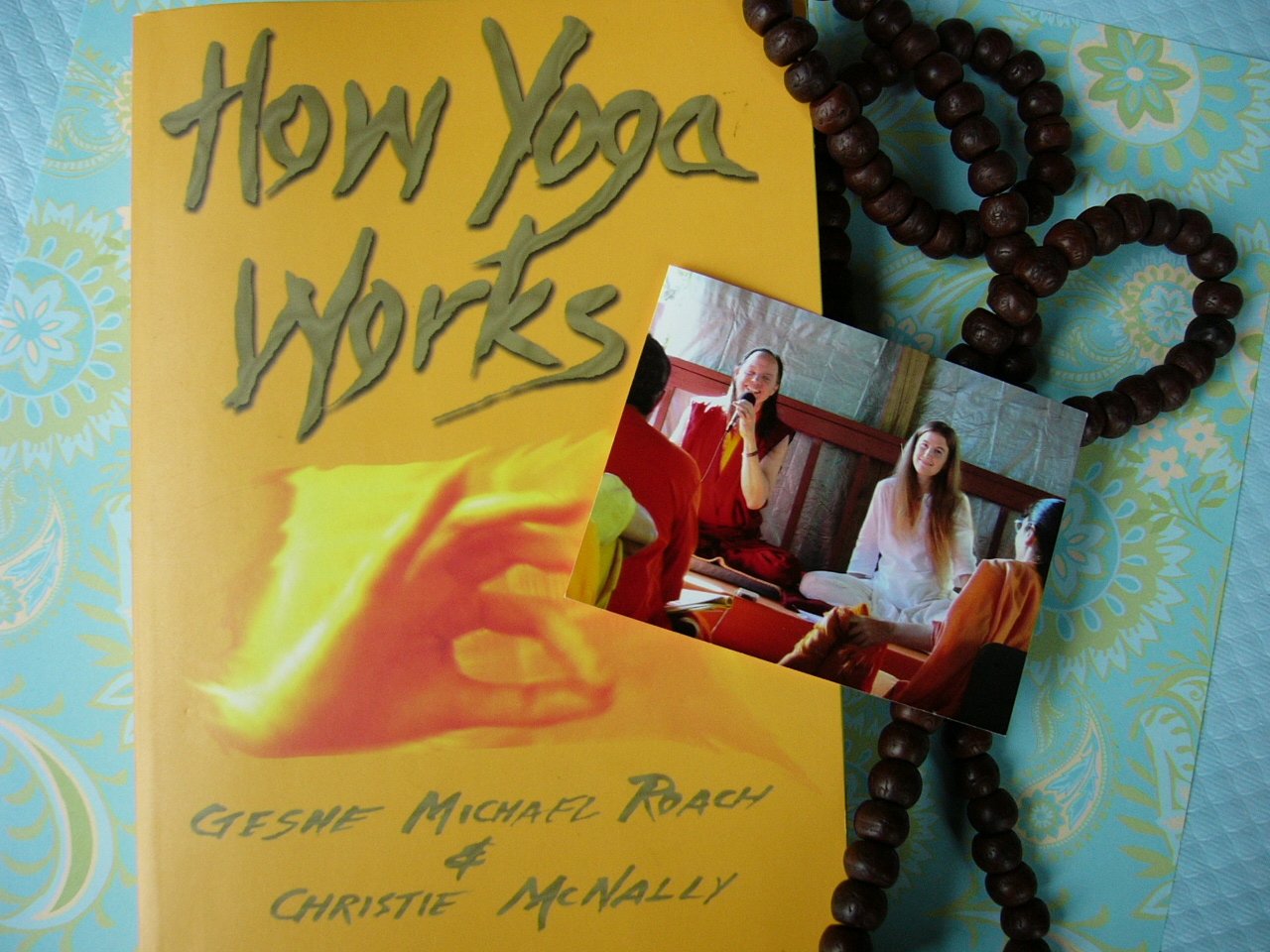
Geshe Michael describes the history of this series and the life of Lady Niguma here.
Thank you for inviting me to your class on Monday to present a brief "Introduction to the Language and Literature of Yoga".
In addition to this post from 2016 which I mentioned in class, you may like to check out this post from my lecture in 2015 which includes links to both of the chants we sang, a little bit about how yoga became popular in the west, and further explanations of the main paths of yoga.
In summary, Yoga offers a whole tapestry of methods to enhance physical, mental, and spiritual well-being.
Aside from the well recognised physical benefits of Hatha Yoga, the Sanskrit language and foundational literature of yoga present numerous threads of insight into how we can live peacefully in a stressful world by developing our strength, flexibility, and resilience.
Songs, stories, myths and legends engage us in the lively timelessness of the oral tradition, and yoga's theory/practice continuum.
I encourage you to stay curious in your yoga practice. You never know what will resonate with you until you experience it.
As they say in India, "Sab kuch milega!", "Everything is possible!".
Thanks for having me in last Thursday to guest lecture on the Language and Literature of Yoga!
I hope you find these reminders and resources helpful in your studies, it was a joy meeting you!
The Language and Literature of Yoga
Sanskrit is the primary classical language of India, and the original language of Yoga.
The word Sanskrit means "perfected" or "refined" and has a rich tradition of creative, scientific, philosophical and religious texts.
Although it is no longer widely spoken on a daily basis, it is still used as a ceremonial language.
The beautiful script (pictured above) is known as Devanagari, or the "vehicle of the gods".
You can see and hear the individual letters pronounced here.
You can find a short glossary of 108 yoga terms defined here.
Transliteration Vs. Translation
Transliteration is transposing the sounds of one language into the script of another. The use of standardized diacritical marks allows for accurate representation of sounds unique to a language.
Translation is converting the words of one language into the words of another to facilitate understanding of the meaning of words or phrases.
Sanskrit in Modern English
English is a member of the Indo-European language family, one of several great (great great...) granddaughters of Sanskrit.
Many words in English (jungle, pyjama, suture, jugular etc.) are borrowed or derived from Sanskrit.
Many Sanskrit terms specific to yoga are becoming well known in English through the names of postures, authors, teachers and gurus. Because their meanings may become lost in translation, more and more often the original words are simply being adopted into our modern language.
Here is a list of English words of Sanskrit origin.
Hints for Pronouncing Sanskrit Words and Names
Here are a few tips for wrapping your tongue around long unfamiliar terms:
- transliterated letter "a" is pronounced "a" as in "around" rather than "a" as in "after"
- there is a short "a" sound behind each consonant unless modified by other vowels
- recognize the difference between unaspirated and aspirated consonants ("b" vs. "bh" etc.)
- Sanskrit has no "th" sound, as in "think" or "th" as in "this". Therefore the word "Hatha"is pronounced "ha-tha" (aspirated "t" with a puff of air) rather than the common mispronunciation of "Ha" (as in hat) "tha" (as in thug).
- longer words are often compounds of shorter words, try breaking them down.
Here is a helpful guide which reiterates the tips above plus several we didn't have time for.
Foundational Literature
Foundational texts are works of world literature which achieve a certain status for their presentation of ideas representative of a culture or philosophy.
Meaning "wisdom" or "knowledge", the Vedas are the revelations of sages during deep meditation carefully preserved and considered to be the roots of Indian philosophy.
They are among the oldest sacred texts in the world, written approximately 1700-1100 BCE.
They were transmitted by oral tradition alone until around 1000 CE and emphasize formal ritual and rites of passage like marriage, birth and death.
They also introduce dana (compassion), karma (action and reaction), sacred dance and Ayurveda (sister sciences of yoga).
Upanishad means “to sit at the feet” [of a guru]).
There were approximately 200 Upanishads written between 1000 BCE and 1500 CE including sections on philosophical theory and the practice of virtues like satya and ahimsa later elucidated in the Yoga Sutras of Patanjali.
The main topics include consciousness, brahman, atman and maya, or the Source, the Self and the illusion that keeps us from seeing them as the same.
Of the great statements or mahavakyas, in our class we focused on Aham Brahmasmi, or loosely translated, "The Self and the Divine are one and the same."
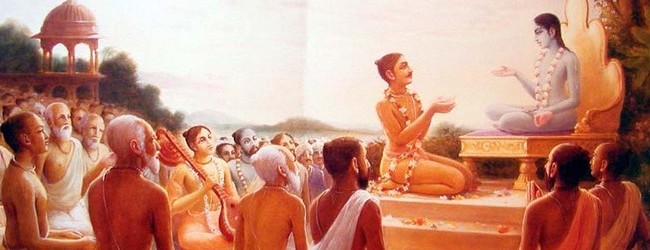
Arjuna and Krishna, the main characters in the Bhagavad Gita
Written approximately 400 BCE, this text is just one chapter of an epic poem called The Mahahtarata, which I affectionately refer to as "the original soap opera".
It highlights themes like Dharma (duty and heroism), Yoga (and the paths of yoga, Karma, Jnana and Bhakti), and Moksha or liberation from suffering and the cycles of suffering or the "battlefields" of life.
The key definition of yoga in this text is:
Yoga karmasu kaushalam (Yoga is skill in action.) found in Chapter 2 verse 50.
He also outlines a strategic "eight-limbed" path of practice which moves from external practices (yamas, niyamas, asana, pranayama, pratyahara) to internal experiences (dharana, dhyana, and samadhi) known as Ashtanga or Raja Yoga.
Krishna playing his flute
Stories and Songs, Enhancing the Practice and Presentation of Yoga
Yoga is an oral tradition, traditionally passed from person to person. This method keeps the teachings both alive and lively.
Storytelling is used widely as a teaching tool for students of all ages.
Music and sacred sound are often employed to attract the attention, maintain focus, reset dissonant physical and mental vibrations and uplift the environment.
You can enhance your own enjoyment of yoga, and in teaching make your lessons more motivating and memorable through the use of instruments and voice.
I hope that I have passed on to you some of the reverence and enthusiasm I feel for the roots and traditions of yoga.
Each person is unique, and different approaches are suitable for different students. I wish you a lifetime of curiosity and exploration into the techniques of yoga that appeal most to you.
Please post your questions and comments, your feedback is precious.
Namaste to Deanna and all the students of Spring Term 2015, PAC 156 Introduction to Yoga Basics at the University of Alberta!
Thank you for inviting me to your class to share a sampling of the origin, history and basic philosophy of Yoga with you!
I've organized some links to previous posts here on Kali's Kitchen that you may find helpful as you go over your notes from last Thursday.
I hope our time together whet your appetite to find out more about the roots of Yoga and How Yoga Really Works!
One of the first things we talked about was the sound and Meaning of Om. We chanted it along with my Shruti Box in a very meditative way, but there is also a popular form of devotional chanting known as Kirtan.
Regarding the history of yoga and its journey to the West, I mentioned two of the early ambassadors of Yoga who introduced the ancient, mystical teachings of India to North America: Swami Vivekananda and Paramahansa Yogananda.
The Seven Chakras
I also mentioned a few of the westerners who significantly contributed to popularizing Yoga in the mid 1900's:
Yoga was traditionally taught in ashrams or retreat centres with monastic teachers known as swamis.
University of Alberta professor Neil Dalal recently released a film called Gurukulam that gives a beautiful "insider's view" of a modern ashram. Don't worry if you didn't catch it at the premiere in March, it turns out they're offering an encore screening on May 31st!
The second came from the Bhagavad Gita, Shloka 2.50, "Yoga is skill in action."
For an easy way to relate to the main characters, Krishna and Arjuna, check out this cute tribute to the original text: Love in the Bhagavad Gita. It's part of a series of cartoons originally published in Ascent magazine that depict the entire text!
Weather-wise, during March in Alberta anything can happen!
One day you are basking in the sunshine, snow melting merrily off the roof, and the next you're shivering, wondering how much longer 'til spring?!? Sigh...
If you need something to do on one of those days, or if you're just excited to be able to get out of the house again, consider checking out one of these movies:
The Canadian premier of Gurukulam is playing at the Metro, March 29, 2015. To celebrate, the event will also feature live music before the movie, and snacks and dialogue with the filmmakers and Andrew Gow, the director of the University of Alberta's Religious Studies Program afterwards.
The Metro also plays a ton of retro, foreign and independent films. Check them out!
I saw several hours of "The Clock" when it played in Toronto, and let me tell you, it is not your typical movie experience! The exhibit features couch seating for your viewing comfort, but no snacks are permitted. (It is a gallery after all, and this, my friends, is art!)
I know it seems weird to watch hours and hours of movie clips of clocks, but trust me, this is anything but boring! Actually, I found it to be a riveting meditation on time, and a fun pop-culture puzzle. I can't wait to see it again! Super hard-core viewers, you can catch the last 24-hour screening on April 11.