Showing posts sorted by relevance for query om. Sort by date Show all posts

Wednesday, 25 April 2012

The Meaning of Om

Om Painting by Omkari

My Guru appears to me in the most unexpected places and moments! 

Yesterday I was given a pop quiz on Om by a gas station attendant. 

He looked at me intently as I paid, and then gesturing to his own throat and my necklace asked, "You are knowing the meaning of this?"

Yak bone Tibetan Om necklace from Nepal

"Yes", I said "It's an Om, a Tibetan Om."

"Ok..." he grinned with a slight Indian head wobble, "but you are knowing the meaning?"

I said the first thing that came to my mind.  "Well, it depends who you ask."

"It's very good for concentration."  he stated matter-of-factly as he took the next customer's payment.

"Yes, very sacred.  Thank you!", I replied and scurried out. 

The whole way home I pondered the meaning of Om and how to express it in a nutshell. 
  • Om is the echoing hum of the universe.  Some astronomers refer to this as "interplanetary harmonics".
  • Om is Pranava, the breath of the Divine.  Religious folks might call it the Name of God.
  • Om is the Bija mantra, the seed of all creation.  Yogic cosmologists compare it to the Big bang theory.
  • Om is the fullness of the range of human vocalization.  Linguists consider it a progression of enunciation.
  • Om is the essence of the Vedas.  Vedantins believe chanting this mantra is as powerful as chanting all of the Vedas. 
Om represents the multitude of sacred trinities.  For example:
  • past, present and future
  • body, mind and spirit
  • Brahma shakti (creation), Vishnu shakti (preservation) and Shiva shakti (transformation or dissolution)
  • the three states of awareness; waking state, dreaming state and unconscious state

But how to best express what it means?

Om sticker from India

Ultimately the true meaning of Om cannot be expressed in words. 

At best, words can only point the yogini toward the direct experience like the teacher who points at the moon and admonishes the student for staring at his finger.

I heard a story in South India about the difficulty of expressing the meaning of Om: 

Kartikeya, the son of Lord Shiva approached Brahma, the Lord of Creation and asked him to explain Om.  Although Brahma claimed to understand and recited twelve thousand verses, Kartikeya found his explanation insufficient and was displeased. 

He approached his father, Lord Shiva who readily admitted to not fully understanding Om, and submitted himself humbly as a student to his son to receive the teachings on Om.

Om plate from India
So the real answer to the gas station attendant's question is in the heart of each individual to be revealed through practice over time.

Ramakrishna said that people immersed in the world cannot know the full meaning of Om, in fact, cannot even hear it.

As it says in Patanjali's Yoga Sutras 1.27-1.29:  (Please forgive my liberal translating!) 

The sacred word representing the Source of All is Om, or Pranava. (1.27)
Repeat this sound with deep reflection on its meaning. (1.28)
From this (repetition with reflection) comes Self-awareness and the removal of the obstacles to bliss. (1.29)

So, repeat Om.  Concentrate with reverence on all of the auspicious aspects of its significance and we will discover its true meaning for our Selves. 

Thank you, Gas Station Guru!  Your observation was a gentle and timely prompt!
 
Namaste!

Monday, 31 October 2011

Surya Namaskar - A Prayer to the Light


In yoga, one of the most challenging and active practices is a series of flowing movements known collectively as The Sun Salutation or Surya Namaskar.

Although many schools of yoga focus on this series as a central practice, others consider it a warm-up to the asanas, a way to heat and stretch the body to improve flexibility and lessen the chance of injury.

What many modern yoga students in the west do not realize is that it is actually an ancient and timeless prayer to Surya, the Sun. 

  
photo from iloveindia.com

It is traditionally performed at sunrise with awareness and devotion, honoring various aspects of the Sun's divinity and our own radiance. 

Many yogis begin each day facing east, repeating this series of asanas 3, 9, 12, 54, or even 108 times!

Special mantras accompany each posture.  Chanting them sharpens the intellect and helps us to grow in reverence for the brillance of nature - both external and internal.

According to the International Sivananda Yoga Vedanta Centre Kirtan book, here are the mantras and translations which accompany each posture.  In the diagram below, position one is depicted just above the posture at the far left, with hands together in Namaste.

Sun salutation

Position 1:  Om Mitraya Namaha, Prostrations to Him who is affectionate to all.
Position 2:  Om Ravaye Namaha, Prostrations to Him who is the cause of change.
Position 3:  Om Suryaya Namaha, Prostrations to Him who induces activity.
Position 4:  Om Bhanave Namaha, Prostrations to Him who diffuses light.
Position 5:  Om Khagaya Namaha, Prostrations to Him who moves in the sky.
Position 6:  Om Pushne Namaha, Prostrations to Him who nourishes all.
Position 7:  Om Hiranyagarbhaya Namaha, Prostrations to Him who contains all wealth.
Position 8:  Om Marichaye Namaha, Prostrations to Him who possesses rays.
Position 9:  Om Adityaya Namaha , Prostrations to Him who is the Son of Aditi.
Position 10:  Om Savitre Namaha, Prostration to Him who is fit to be worshipped.
Position 11:  Om Arkaya Namaha, Prostrations to Him who is the reproducer of everything.
Position 12:  Om Bhaskaraya Namaha, Prostrations to Him who is the cause of luster.

If you'd like to hear these mantras pronounced, you can check out this kind-of-scratchy but cool, old-school recording at Geet Ganga by clicking here.


Last summer, at a particularly challenging point in our lives, my Mom and I composed the following prayer together to encourage ourselves and our yoga practice. 

It is a liberal translation of the original Surya Namaskar mantras written in affirmation style.  For us, it personalizes and embodies the feeling-vibration of each mantra and its accompanying position. 

Just like the Sanskrit version, we chant each line mentally (or out loud with the drone of the Shruti Box) as we move through the asanas.

It is very close to our hearts, so truthfully, it is with some hesitancy that I post it. 

I generally prefer to keep it to myself, or include it only orally as part of live teachings to promote a more traditional and intimate understanding of the Philosophy of Yoga.  But so many of you in Yoga teacher training programs in the last year have requested it, that I offer it to you with thanks and love, here in writing now. 

I hope that by doing so, you will be encouraged to salute and radiate your own highest Self regardless of what's happening (or not happening) in your life today. 


A Prayer to the Light

I am a friend to all.
I open myself to change.
I bow to the Light.
My inner Light shines.
I move through life with Grace.
I am helpful to all.
I am generous, warm, and open-hearted.
I am strong.
I am part of Divine Creation.
I like who I am.
I am growing.
I radiate Peace.

- Colleen and Tara Woltjen, August, 2010

The following mantra may be chanted at the end of Surya Namaskar practice to reiterate the benefits:
ādityasya namaskāran ye kurvanti dine dine
āyuḥ prajñā balam vīryam tejasteśān ca jāyate

आदित्यस्य नमस्कारन् ये कुर्वन्ति दिने दिने
आयुः प्रज्ञा बलम् वीर्यम् तेजस्तेशान् च जायते

By performing Sun Salutation day by day,
your age, consciousness, strength, essence of humanity
and glow will never fade away.

Om Hraum Mitraya Namaha - May the light of friendship shine, drawing noble companionship!  

Thursday, 28 July 2011

Om Trayambakam

Cucumber
All the rain this year may have limited our chances to tan but it has certainly been a blessing for gardeners!  Bountiful crops are coming to harvest and we are enjoying the sweet and juicy fruits of our efforts and of the cycle of nature in abundance! 

A delicious gift of garden tomatos and a fresh cucumber from a generous student got me thinking about one of my favorite fresh summer salads (Israeli Salad Recipe on the Prasad Page) and a summer several years ago, when I worked at a U-pick cucumber farm to deepen my understanding of one of the most famous mantras in Yoga, the Mahamrityunjaya Mantra.  This is the mantra of great liberation, also known as the Om Trayambakam.


Lord Shiva, Lord of the Yogis, destroying the demon of ignorance.

Dedicated to Lord Shiva, whose eye of intuition (or third eye) opens to bring about the dance of destruction, this mantra is often chanted at the beginning of important endeavors and voyages and at occassions which mark time like birthdays, and passings.  Traditionally it is chanted as an amulet to protect the chanter or others from calamities like scorpion stings, rampaging elephants and other equally nasty disasters! 

Nowadays, at the ashram and at home, we chant it whenever we get into a vehicle, praying for the safety of the driver, the passengers and everyone on the road or in the air or on the ocean as the case may be.  We love to "Om Trayambakam" our friends when they depart, wishing them a safe journey and a speedy return.

This mantra evokes the image of a cucumber being severed from the vine, and reminds us that we too are released from the bondage of our own mortal limitations, not one itsy-bitsy moment too early or too late.


Om Tryambakam Yajamahe
Sugandhim Pushtivardhanam
Urvarukamiva Bandhanan
Mrityor Mukshiya Maamritat
We Meditate on the Three-eyed reality
Which permeates and nourishes all like a fragrance.
May we be liberated from death for the sake of immortality,
Even as the cucumber is severed from bondage to the creeper.


This mantra, handwritten in Devanagari or the written form of Sanskrit, as well as the transliteration and translation above can be found at:  swamij.com


You can chant this mantra 3 times, 9 times, or 108 times to bless and remind your Self that all things happen according to cycle of nature and divine timing! 

As I plucked the ripe cucumbers that summer, I chanted this mantra over and over and over again and re-learned a basic truth in gardening and in life.  Everything has a season.  There is a time to sow the seeds, and a time to reap the harvest of what we've planted. 

If the cucumbers are tugged before they are ready to release from the plant, the vine itself is damaged.  If they are left too long, they sag into the soil and rot.  The art in cucumber picking, and maybe life, is not to struggle against either. 

Be diligent in maintaining your garden and your practice and you won't lose or limit your harvest.  Be gentle and patient and at just the right moment, the sweet reward will drop willingly into your hands!

Om Trayambakam!


Wednesday, 14 May 2014

Om Namo Narayanaya: Chant for World Peace


Image Source: Sivananda Ashram, Uttarkashi
Raja Yogis and Yoginis!  Remember a couple of months ago when we gathered together to write the mantra for peace, Om Namo Narayanaya in Sanskrit?

Our friend Jenny was embarking on a voyage to the Himalayas and kindly agreed to deliver and "deposit" our prayers to the Swami Vishnudevananda Peace Bank near the Sivananda Ashram near Uttarkashi. 

Well, check out this beautiful update from Jenny!  Blessings from the Himalayas!

"Hope everything is going peaceful and smooth for you all <3 I have been thinking about you and our night writing Om Namo Narayanaya - the peace mantra - to send along to the Himalayas.  Here's a short story about the travel of our little love letter:) ...  

So when I left Edmonton there was snow across Canada and the flights were all delayed.  I missed every flight except the one out of Edmonton and got rerouted twice on the way to India.  My bag, which had the peace mantras in it (because Tara was totally right - they'd keep the bag safe) also went on its own adventure, spreading peace and harmony wherever it went... then it came to meet me in Montreal so we could travel together to India:)  

Made it to Uttarkashi and the little village Netala... along the Ganges... The energy at the ashram and in the Himalayas is amazing.  And Mathaji, the spiritual mother at the Sivanada ashram there loved to receive all our writings for the peace bank.  She collects them from all over the world and organizes them to be offered at the entrance to the cave outside of Gangotri (the end of the road heading toward the mouth of the Ganges) where they fly to spread the peace all over:)  

Anyways, I feel so blessed to take the Peace Mantras part of the way:)  Hope to see you soon! 

Much love and many blessings to you and yours!  
xxox
Om Shanti
Jenny"

Thank you Jenny!  We can hardly wait to hear more about your adventures in India! 

Om Namo Narayanaya!

Wednesday, 25 January 2012

Om Mani Padme Hum

Om-mani-padme-hum 02.svg
Om Mani Padme Hum (image borrowed from Wikipedia)
Hail to the Jewel in the Lotus 

New!  I am delighted to be offering Tibetan Heart Yoga (Tong-len or "Taking and Giving" as taught by Geshe Michael Roach and Lama Christie McNally) on Saturday mornings at Yoga for Today!

In this class we sing the mantra "Om Mani Padme Hum", the mantra of Chenrizig, The Bodhisattva of Compassion.

You can click here to read more on Wikipedia about this beautiful mantra. 

Find out which negative emotions it purifies while developing The Six Perfections! 

Sunday, 24 May 2015

To Sum it Up: University of Alberta Lecture

Om
Namaste to Deanna and all the students of Spring Term 2015, PAC 156 Introduction to Yoga Basics at the University of Alberta!

Thank you for inviting me to your class to share a sampling of the origin, history and basic philosophy of Yoga with you!

I've organized some links to previous posts here on Kali's Kitchen that you may find helpful as you go over your notes from last Thursday.

I hope our time together whet your appetite to find out more about the roots of Yoga and How Yoga Really Works!

One of the first things we talked about was the sound and Meaning of Om.  We chanted it along with my Shruti Box in a very meditative way, but there is also a popular form of devotional chanting known as Kirtan.

Check out this video featuring one of my Guru brothers from the Sivananda Ashram in the Bahamas and the mantra Om: Hari Om Kirtan with Narayan Jyoti.

We chanted The Teacher/Student Chant in Sanskrit.  Not easy, but it sounded great!

Regarding the history of yoga and its journey to the West, I mentioned two of the early ambassadors of Yoga who introduced the ancient, mystical teachings of India to North America:  Swami Vivekananda and Paramahansa Yogananda.

The Seven Chakras
I also mentioned a few of the westerners who significantly contributed to popularizing Yoga in the mid 1900's:

Swami Vishnudevananda and The Beatles

Bhagavan Das, Kali Kirtan with Bhagavan Das and Richard Alpert/RamDass, Ram Dass on Giving and Receiving, Ram Dass Gives Maharaji "The Yogi Medicine"

Yoga was traditionally taught in ashrams or retreat centres with monastic teachers known as swamis.  

University of Alberta professor Neil Dalal recently released a film called Gurukulam that gives a beautiful "insider's view" of a modern ashram.  Don't worry if you didn't catch it at the premiere in March, it turns out they're offering an encore screening on May 31st!

Image Source
I gave you two classical definitions of Yoga:

The first was from the Yoga Sutras of Patanjali,  Sutra 1.2, "Yoga is the cessation of the mental waves."

For more about Patanjali and Raja/Asht-anga Yoga see:  Legends of Yoga: The Birth of Patanjali, and Yoga Sutras, Free Online Resources

The second came from the Bhagavad Gita,  Shloka 2.50, "Yoga is skill in action."

For an easy way to relate to the main characters, Krishna and Arjuna, check out this cute tribute to the original text: Love in the Bhagavad Gita.  It's part of a series of cartoons originally published in Ascent magazine that depict the entire text!

I mentioned several of the main Paths of Yoga:  Raja Yoga, Bhakti Yoga, Jnana Yoga, Karma Yoga and of course, Hatha Yoga the most widely practiced path of Yoga in the West.

We ended with the Chant for Enlightenment and wishes for Shanti or Peace.

May you all enjoy your studies and benefit the world with your wisdom!

Namaste!


Thursday, 28 July 2011

Namaste!


                Om Gam Ganapataye Namaha
                 Om Gum Gurubhyo Namaha
                 Om Aim Saraswatyai Namaha
Woo Hoo!!! So I'm finally online, and looking forward to hanging out in Kali's Kitchen with you!  I'm new at this blog thing so forgive me for going "live" while still "under construction" but then, hey... isn't that what life's all about anyway? 

So, grab a cup of chai, listen to this beautiful invocation from Narayan Jyoti, take a look around at some of the great yoga links and resources I've already gathered here, and let me know what you think. 


I'll be adding more to the pages as often as I can, so come back soon! 

Om...

Tuesday, 4 December 2018

Thank You, MacEwan University

Om Symbol at the Sivananda Yoga Retreat, Bahamas
Namaste,

Here are a few links, charts and tips to support today's guest lecture on The Language and Literature of Yoga.  

Feel free to browse around Kali's Kitchen.  It's a cozy place to explore the paths of Yoga and allow your own realizations, musings, and practice to "cook".

Enjoy!

We began today's class with the chant Om Sahana Vavatu in the call-and-response style of a traditional ashram or gurukulam.


The main topics introduced were:

The Language of Yoga:

The Foundational Literature of Yoga:

The Vedas
The Upanishads
The Mahabharata including the famous chapter The Bhagavad Gita
The Yoga Sutras of Patanjali

*Although we didn't discuss it in class, I also recommend the highly influential 15th-century text The Hatha Yoga Pradipika for a deeper understanding of the foundations of the path of Hatha Yoga specifically.


Key Definitions of Yoga:

The Vedas and the Upanishads: Aham Brahmasmi or "The microcosm (individual self) and the macrocosm (universal Self) are one and the same."

The Bhagavad Gita: Yoga karmasu kaushalam or "Yoga is skill in action"

The Yoga Sutras of Patanjali:  PYS 1.2 Yogash chitta vritti nirodhah or "Yoga is the stopping of the fluctuations of consciousness/the stilling of the mind."


Note* If you are in need of source materials for papers or your own personal study, I highly recommend archive.org, a non-profit digital library of millions of scanned documents and texts.

Final Chant:  Asato Ma Sadgamaya


Best wishes in your studies.  May your learning be brilliant and may it bring peace of mind, peace in the world and peace in your life.

Om Shanti,
Tara


Thursday, 3 November 2011

The Teacher Student Chant

Om
Sahanavavatu sahanau bhunaktu
Sahaviryam karavavahai
Tejasvinavadhitamastu
Ma vidvishavahayai
Om Shanti Shanti Shanti

Let the Studies that we undertake be effulgent;
Let there be no Animosity amongst us;
OM. Peace, Peace, Peace.

(Recited before the commencement of education)  From the Yajurveda Taittiriya Upanishad 2.2.2

Many of you are familiar with this short chant from the Upanishads from the opening of the classes I teach. 

I learned it during my Sivananda Yoga Teacher Training in 1997 and loved it so much that I have chanted it out loud or in my heart before every Yoga class I've taken or taught since.

It reminds me that we are all, always, and in all ways both teacher and student in every situation. 

It reminds me to honor both roles and the divine Leela or play we partake in when we assume either role.

And it reminds me that on those rare and precious occasions when we have the karma to participate in formal sacred teachings, we must make a conscious decision to embody Namaste - to suspend criticism and judgement and choose to see the divinity in eachother rather than the differences.

Although the tune below is not the one I typically use, it is definitely one of my very favorites. 

It comes from the cd "Chants of India" on George Harrison's Angel Records Label and features the great Ravi Shankar on sitar. 

It is so beautiful I had to share it here. 

Thank you for chanting it with me.  May we enjoy learning Yoga together for as long as it takes...


Chant for Enlightenment

Om
Asatoma sat gamaya
Tamaso ma jyotir gamaya
Mryityor ma amritam gamaya

Om
From the unreal (untruth) to the real (truth)
from darkness (tamas) to light (sattva)
from suffering to the nectar of immortality.

 - Brihadaranyaka Upanishad


This is the verse I often close my yoga classes with.  I chant it the way I learned from my Sivananda teachers, but here are a few of others for you to listen to.

First, a beautiful and meditative Ravi Shankar version from "Chants of India".


Now, some of you may recognize the next one from the final credits of "The Matrix".

WARNING - this video contains scenes from the movie which are violent and gross!

Please feel free to scroll to something more sattvic while you listen.


And finally, the sweet and lovely Deva Premal. 

(Did I ever tell you that I met Deva?  In 2009, at the Omega Ecstatic Chant weekend.  I thanked her for Dakshina which I and many of my students at the time were listening to over and over and over again!  She hugged me for a long time and Om'ed in my ear... ahhh... I pass that big hug and her beautiful smile on to you now!)


Let us reach enlightenment together!  Jai!

Wednesday, 5 October 2011

Students at Yoga for Today Chant the Yoga Sutras!


Painting of Saraswati at the Sivananda Ashram in the Bahamas by Uma (Diane Woodward)

Lately Wednesdays have become my favorite day of the week.  I wake up looking forward to gathering in Satsang with the eager students of the first-ever Meditation and Yoga Philosophy class at Yoga for Today!

We've been exploring the deeper dimensions of Yoga through meditation, songs, stories, chanting in Sanskrit and writing in Devanagari, "vehicle of the Gods", the beautiful written script of Sanskrit, the ancient and sacred language of Yoga. 

Sanskrit Alphabet chart borrowed from IndiaDivine.org


In just three classes they have already learned how to draw the beautiful and auspicious symbol of Om and learned about it's components and the states of consciousness.


We also practiced writing the words Yoga and Guru in Devanagari. 

AND they have even been learning the first four Yoga Sutras of Patanjali by heart:
Atha yoganushasanam. 1.1
Yogas chitta vritti nirodhah. 1.2
Tada drashtuh swaroope vasthanam. 1.3
Vritti sarupyam itaratra. 1.4
You should hear it!

It's so exciting to see them with their notebooks and pens, on the edge of their seats, ready with questions and open to the less frequently discussed aspects of this practice.

Today we continue to celebrate Navaratri and the days dedicated to Saraswati, the Goddess of languages, arts, music and learning.

During this evening's class we will be chanting Om Aim Saraswatyai Namaha and writing Devi, praising the Goddess of Wisdom by her own means.

For the next couple of weeks we will continue practicing likhita japa (the devotional writing of mantras) and chanting the first four Yoga Sutras in anticipation of our last class. 

On that evening, a FREE PERFORMANCE AND REFRESHMENTS will be offered to our friends and families from 8-8:30! 

You are invited to join us to celebrate the timeless teachings of Yoga and these diligent and joyful Yogis and Yoginis of Today!

Om Aim Saraswatyai Namaha!

Wednesday, 2 February 2022

Grant MacEwan, The Language and Literature of Yoga

Namaste 🙏 

There is a saying in Sanskrit, the original language of Yoga that in any learning environment:

We learn 25% from our teachers, 25% from our peers, 25% we figure out ourselves and 25% we learn over time. 

That said, in addition to following along with this post in today’s class, I invite you to return and review the material and links, contemplate their relevance in your life and practice, and discuss them with your classmates. 

Rest assured, not all of it was meaningful to me from the beginning, and there is always more to learn, so if some of this feels like more than you’re ready for, that’s ok, you have a lifetime to practice.

I have included several questions for your consideration. Please feel free to voice your answers or further questions for discussion during class.


The Language and Literature of Yoga


Sanskrit is the primary classical language of India, and the original language of Yoga which is considered to be one of the six classical schools of Indian Philosophy, and includes the posture practice with which we are familiar.

The word Sanskrit means "perfected" or "refined" and has a rich tradition of creative, scientific, philosophical and religious texts. 

Although it is no longer widely spoken on a daily basis, it is still very much in use as a ceremonial language.

The beautiful script is known as Devanagari, or the "vehicle of the gods". 


The Cambridge Introduction to Sanskrit  is the best introductory text I have come across and is recommended for use in the Sanskrit classes at the University of Alberta. Click in the link and go to “Other Resources “ to find free alphabet charts, videos, worksheets and more.

Yoga Sutras in Devanagari and Transliterated Sanskrit from the Arlington Centre is a free PDF of the full Yoga Sutras of Patanjali with the diacritical marks. I’m not necessarily saying this is the “best” translation, but I do find the format and language approachable and helpful for beginners.

Q. Does language matter? Do names matter? What are some of the challenges and benefits of studying Yoga with or in the original language?


Transliteration Vs. Translation


Transliteration is transposing the sounds of one language into the script of another.  The use of standardized diacritical marks allows for accurate representation of sounds unique to a language.

Q. What challenges may a student encounter during the transliteration phase?

Translation is converting the words of one language into the words of another to facilitate understanding of the meaning of words or phrases. 

Q. What challenges may a student encounter during the translation phase?

Sanskrit in Modern English

English is a member of the Indo-European language family, one of several descendants of Sanskrit.

Many non-yoga specific words in English (jungle, bandana, pyjama, suture, jugular etc.) are borrowed or derived from Sanskrit. 

Many Sanskrit terms specific to yoga are becoming well known in English through the names of postures, authors, teachers and gurus.  Because their meanings may become lost in translation, often the original words are simply adopted into our modern language.

Here is an extensive and perhaps surprising list of English words of Sanskrit origin.

Q. What’s your favourite English word borrowed or derived from Sanskrit ?


Hints for Pronouncing Sanskrit Words and Names


Here are a few basic tips for pronouncing unfamiliar Sanskrit vocabulary, places and names:

- unlike English, Sanskrit is a phonetic language, meaning each and every letter is pronounced and always in the same way.

- transliterated letter "a" is pronounced "uh” as in "around" rather than "a" as in "after" or “Canada”

- each consonant is followed by a short “a” sound unless modified by other vowels. Letters do not have names in Sanskrit, they are known by their sounds.

- knowing where in the mouth the sound is produced will help you understand how to produce the sound

- there is a distinct and unfamiliar difference for English speakers between unaspirated and aspirated consonants ("b" vs. "bh" etc.)

- Sanskrit has no "th" sound, as in English “think" or "th" as in "this".  Rather the “th” in transliterated words indicates an aspirated consonant. For example, the word "Hatha"is pronounced "ha-tha" (“t" with a puff of air) rather than the common English mispronunciation of "Ha" (as in hat) "tha" (as in thug). Note* there are two such sounds which may seem similar to your ear but are actually produced in different areas of the mouth.

- longer words and names are often compounds of shorter words, so try breaking them down into syllables.

Here is a more extensive pronunciation guide should you wish to explore this matter further.

Q. What difficulties may arise when words or names are mispronounced?

Q.  What are some benefits of speaking more than one language?

Foundational Literature

Foundational texts are works of world literature which achieve a certain status for their presentation of ideas as representative of a culture or philosophy. 

Philology is the study of literary texts, their meaning, authenticity and historical context.


The Foundational Texts of Yoga


The Vedas

Meaning "wisdom" or "knowledge", the Vedas are traditionally said to be the revelations of sages during deep meditation, carefully preserved and considered to be the roots of Indian philosophy.

They are among the oldest sacred texts in the world, written approximately 1700-1100 BCE.

They were transmitted by oral tradition alone until around 1000 CE. They emphasize formal ritual and rites of passage like marriage, birth and death. 

They also introduce dana (compassion), karma (action and reaction), sacred dance and Ayurveda (sister sciences of yoga).

The Upanishads

Upanishad means “to sit at the feet” [of a Guru].

There were approximately 200 Upanishads written between 1000 BCE and 1500 CE including sections on philosophical theory and the practice of virtues like satya and ahimsa later also elucidated in the Yoga Sutras of Patanjali.

Topics include consciousness, brahman, atman and maya, or the Source, the Self and the illusion that keeps us from seeing them as the same. It also proposes multiple etymological possibilities for Bija or “seed” mantra Om (Aum)

Of the great statements or mahavakyas of the Upanishads is Aham Brahmasmi, or loosely translated, "The Self and the Divine are one and the same." A similar sentiment can be said to be encapsulated in the sound symbol Om.


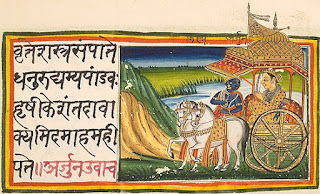
Arjuna and Krishna, the main characters in the Bhagavad Gita

The Bhagavad Gita

Written approximately 400 BCE, this text is just one chapter of an epic poem called  The Mahabharata.

It is one of the most heavily translated texts in the world. It highlights themes of  Dharma(duty and heroism), Yoga (and the paths of yoga, Karma, Jnana and Bhakti), Moksha or liberation from suffering and the cycles of suffering on the “battlefields" of life.


One key definition of yoga in this text is:

Yoga karmasu kaushalam (Yoga is skill in action.) found in Chapter 2 verse 50.


The Yoga Sutras of Patanjali

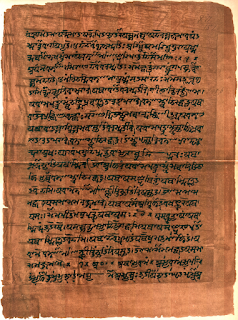
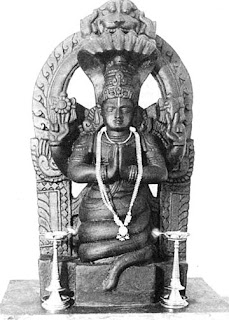
Also known as the Patanjala Yoga Shastra, written approximately 1600 years ago, (perhaps as late as 325-425 CE suggests recent research by Dr. Philipp Maas), Patanjali was the first to codify the teachings of yoga into a written format known as Sutras. Ideally these terse aphorisms are studied in the original language along with the first commentary called the Yoga Bashya.

Yoga Studies Podcast, Philipp Maas

Yoga Sutra Chant, The Sanskrit Channel

One of Patanjali’s key definitions of yoga is stated in the second line of the first chapter:

Yogaschittavrittinirodhah (Yoga is the stopping of the disturbed waves of the mind.)

In the second chapter, the author famously outlines a strategic "eight-limbed" path of practice which moves from external practices (yamas, niyamas, asana, pranayama, pratyahara) to internal experiences (dharana, dhyana, and samadhi). The path is known as Ashtanga or Raja Yoga. This practice is widely regarded as central to modern Hatha Yoga.

The sound symbol Om is mentioned in chapter 1, sutras 27-28 as the energy of manifestation which should be chanted repeatedly (japa) to encourage introspection and remove obstacles to the state of samadhi.

Q. How do these “definitions” compare/contrast with the modern interpretation of yoga in Canada?

Q. Is reading these texts in their original language necessary to achieve the goal of yoga?

Please note* This is by no means a full list of the foundational texts of yoga! It is only the tip of the tip of the iceberg! Please do explore further.

Krishna playing his flute


Mantras, Stories and Songs

Traditionally, Yoga was an oral tradition, passed from person to person keeping the teachings both alive and lively.

Singing, chanting, poetry and recitation, in fact all forms of sound, speech and writing are venerated in yoga philosophy. Personified as a beautiful Goddess, language is seen as a muse for creativity.

Storytelling is used widely as a teaching tool for students of all ages.

Music and sacred sound are central to the theory-practice continuum. They attract the attention, help maintain focus, reset dissonant physical and mental vibrations and uplift the environment.

Q. How can some knowledge of Sanskrit enhance my experience of yoga?


In Conclusion

I hope that I have passed on to you some of the reverence and enthusiasm I feel for the Language and Literature of Yoga, as well as points for reflection and some resources with which to follow up on your curiosity. 

Thank you for your time and attention today. Namaste!