Wednesday, 2 February 2022

Grant MacEwan, The Language and Literature of Yoga

Namaste ЁЯЩП 

There is a saying in Sanskrit, the original language of Yoga that in any learning environment:

We learn 25% from our teachers, 25% from our peers, 25% we figure out ourselves and 25% we learn over time. 

That said, in addition to following along with this post in today’s class, I invite you to return and review the material and links, contemplate their relevance in your life and practice, and discuss them with your classmates. 

Rest assured, not all of it was meaningful to me from the beginning, and there is always more to learn, so if some of this feels like more than you’re ready for, that’s ok, you have a lifetime to practice.

I have included several questions for your consideration. Please feel free to voice your answers or further questions for discussion during class.


The Language and Literature of Yoga


Sanskrit is the primary classical language of India, and the original language of Yoga which is considered to be one of the six classical schools of Indian Philosophy, and includes the posture practice with which we are familiar.

The word Sanskrit means "perfected" or "refined" and has a rich tradition of creative, scientific, philosophical and religious texts. 

Although it is no longer widely spoken on a daily basis, it is still very much in use as a ceremonial language.

The beautiful script is known as Devanagari, or the "vehicle of the gods". 

The Cambridge Introduction to Sanskrit  is the best introductory text I have come across and is recommended for use in the Sanskrit classes at the University of Alberta. Click in the link and go to “Other Resources “ to find free alphabet charts, videos, worksheets and more.

Yoga Sutras in Devanagari and Transliterated Sanskrit from the Arlington Centre is a free PDF of the full Yoga Sutras of Patanjali with the diacritical marks. I’m not necessarily saying this is the “best” translation, but I do find the format and language approachable and helpful for beginners.

Q. Does language matter? Do names matter? What are some of the challenges and benefits of studying Yoga with or in the original language?


Transliteration Vs. Translation


Transliteration is transposing the sounds of one language into the script of another.  The use of standardized diacritical marks allows for accurate representation of sounds unique to a language.

Q. What challenges may a student encounter during the transliteration phase?

Translation is converting the words of one language into the words of another to facilitate understanding of the meaning of words or phrases. 

Q. What challenges may a student encounter during the translation phase?

Sanskrit in Modern English

English is a member of the Indo-European language family, one of several descendants of Sanskrit.

Many non-yoga specific words in English (jungle, bandana, pyjama, suture, jugular etc.) are borrowed or derived from Sanskrit. 

Many Sanskrit terms specific to yoga are becoming well known in English through the names of postures, authors, teachers and gurus.  Because their meanings may become lost in translation, often the original words are simply adopted into our modern language.

Here is an extensive and perhaps surprising list of English words of Sanskrit origin.

Q. What’s your favourite English word borrowed or derived from Sanskrit ?


Hints for Pronouncing Sanskrit Words and Names


Here are a few basic tips for pronouncing unfamiliar Sanskrit vocabulary, places and names:

- unlike English, Sanskrit is a phonetic language, meaning each and every letter is pronounced and always in the same way.

- transliterated letter "a" is pronounced "uh” as in "around" rather than "a" as in "after" or “Canada”

- each consonant is followed by a short “a” sound unless modified by other vowels. Letters do not have names in Sanskrit, they are known by their sounds.

- knowing where in the mouth the sound is produced will help you understand how to produce the sound

- there is a distinct and unfamiliar difference for English speakers between unaspirated and aspirated consonants ("b" vs. "bh" etc.)

- Sanskrit has no "th" sound, as in English “think" or "th" as in "this".  Rather the “th” in transliterated words indicates an aspirated consonant. For example, the word "Hatha"is pronounced "ha-tha" (“t" with a puff of air) rather than the common English mispronunciation of "Ha" (as in hat) "tha" (as in thug). Note* there are two such sounds which may seem similar to your ear but are actually produced in different areas of the mouth.

- longer words and names are often compounds of shorter words, so try breaking them down into syllables.

Here is a more extensive pronunciation guide should you wish to explore this matter further.

Q. What difficulties may arise when words or names are mispronounced?

Q.  What are some benefits of speaking more than one language?

Foundational Literature

Foundational texts are works of world literature which achieve a certain status for their presentation of ideas as representative of a culture or philosophy. 

Philology is the study of literary texts, their meaning, authenticity and historical context.


The Foundational Texts of Yoga
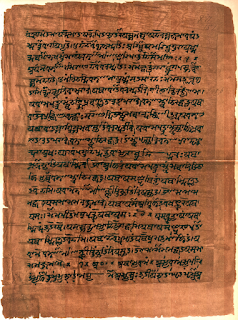

The Vedas

Meaning "wisdom" or "knowledge", the Vedas are traditionally said to be the revelations of sages during deep meditation, carefully preserved and considered to be the roots of Indian philosophy.

They are among the oldest sacred texts in the world, written approximately 1700-1100 BCE.

They were transmitted by oral tradition alone until around 1000 CE. They emphasize formal ritual and rites of passage like marriage, birth and death. 

They also introduce dana (compassion), karma (action and reaction), sacred dance and Ayurveda (sister sciences of yoga).

The Upanishads

Upanishad means “to sit at the feet” [of a Guru].

There were approximately 200 Upanishads written between 1000 BCE and 1500 CE including sections on philosophical theory and the practice of virtues like satya and ahimsa later also elucidated in the Yoga Sutras of Patanjali.

Topics include consciousnessbrahman, atman and maya, or the Source, the Self and the illusion that keeps us from seeing them as the same. It also proposes multiple etymological possibilities for Bija or “seed” mantra Om (Aum)

Of the great statements or mahavakyas of the Upanishads is Aham Brahmasmi, or loosely translated, "The Self and the Divine are one and the same." A similar sentiment can be said to be encapsulated in the sound symbol Om.


Arjuna and Krishna, the main characters in the Bhagavad Gita

The Bhagavad Gita

Written approximately 400 BCE, this text is just one chapter of an epic poem called  The Mahabharata.

It is one of the most heavily translated texts in the world. It highlights themes of  Dharma(duty and heroism), Yoga (and the paths of yoga, KarmaJnana and Bhakti), Moksha or liberation from suffering and the cycles of suffering on the “battlefields" of life.


One key definition of yoga in this text is:

Yoga karmasu kaushalam (Yoga is skill in action.) found in Chapter 2 verse 50.
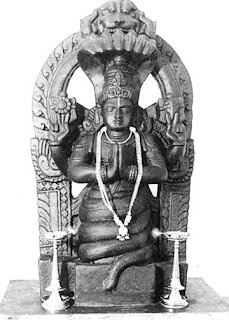

The Yoga Sutras of Patanjali

Also known as the Patanjala Yoga Shastra, written approximately 1600 years ago, (perhaps as late as 325-425 CE suggests recent research by Dr. Philipp Maas), Patanjali was the first to codify the teachings of yoga into a written format known as Sutras. Ideally these terse aphorisms are studied in the original language along with the first commentary called the Yoga Bashya.

Yoga Studies Podcast, Philipp Maas

Yoga Sutra Chant, The Sanskrit Channel

One of Patanjali’s key definitions of yoga is stated in the second line of the first chapter:

Yogaschittavrittinirodhah (Yoga is the stopping of the disturbed waves of the mind.)

In the second chapter, the author famously outlines a strategic "eight-limbed" path of practice which moves from external practices (yamas, niyamas, asana, pranayama, pratyahara) to internal experiences (dharana, dhyana, and samadhi). The path is known as Ashtanga or Raja Yoga. This practice is widely regarded as central to modern Hatha Yoga.

The sound symbol Om is mentioned in chapter 1, sutras 27-28 as the energy of manifestation which should be chanted repeatedly (japa) to encourage introspection and remove obstacles to the state of samadhi.

Q. How do these “definitions” compare/contrast with the modern interpretation of yoga in Canada?

Q. Is reading these texts in their original language necessary to achieve the goal of yoga?

Please note* This is by no means a full list of the foundational texts of yoga! It is only the tip of the tip of the iceberg! Please do explore further.

Krishna playing his flute


Mantras, Stories and Songs

Traditionally, Yoga was an oral tradition, passed from person to person keeping the teachings both alive and lively.

Singing, chanting, poetry and recitation, in fact all forms of sound, speech and writing are venerated in yoga philosophy. Personified as a beautiful Goddess, language is seen as a muse for creativity.

Storytelling is used widely as a teaching tool for students of all ages.

Music and sacred sound are central to the theory-practice continuum. They attract the attention, help maintain focus, reset dissonant physical and mental vibrations and uplift the environment.

Q. How can some knowledge of Sanskrit enhance my experience of yoga?


In Conclusion

I hope that I have passed on to you some of the reverence and enthusiasm I feel for the Language and Literature of Yoga, as well as points for reflection and some resources with which to follow up on your curiosity. 

Thank you for your time and attention today. Namaste!


Monday, 18 October 2021

Welcome PAC 156


Namaste ЁЯЩП Welcome to Kali’s Kitchen!

I named this blog after Kali, the Hindu goddess of time because I recognize that while some learnings happen immediately, some need time to “stew”.

As I mentioned today, there is a Sanskrit saying that we learn 25% from our teachers, 25% from our peers, 25% we figure out ourselves and 25% we learn over time.  So in addition to reviewing today’s presentation, I invite you to come back and look around anytime as your studies and contemplations brew.

Today we discussed “The Language and Literature of Yoga”.   Click here for a full recap.

As well, here are a few additional resources for you:

The Cambridge Introduction to Sanskrit  is the best introductory text I have come across and is recommended for use in the Sanskrit classes at the U of A. At the link above you will find free alphabet charts, videos, worksheets and more.

Yoga Sutras in Devanagari and Transliterated Sanskrit from the Arlington Centre is a free PDF of the full Yoga Sutras of Patanjali with the diacritical marks. I’m not saying this is the “best” translation, but I do find the format and language approachable and helpful.

In addition to PAC classes, The University of Alberta offers courses related to yoga in the departments of History, Philosophy and Religion.  We have extraordinary scholars on faculty and I encourage you to explore this subject further.

Thank you for attending and sharing with me today, it was a joy to spend time with you!


Monday, 22 February 2021

Sunday, 31 January 2021

#initforallthelove


This Valentine’s, I’m in it for ALL the love!

Starting February first, I’m celebrating with a 14 day creative meditation, origami photo project. You yogis and yoginis will quickly recognize  that it’s inspired by the classic Buddhist Loving Kindness Meditation.

It is an opportunity for me to share my passion for paperfolding, a timeless art of transformation and mindfulness.  It’s also a chance to reflect on and offer appreciation for all the forms of love in my life.

I hope it will inspire you too, to reflect on the presence of love in your life and express and celebrate it your way.

Hop over to oneloveorigami.blogspot.ca or to my Facebook page, tarawoltjen, to see the whole series.

Please also feel free to share your reflections.  Together we can make this a practice in “Unity in Diversity” and a loving tribute to the most nourishing relationships in our lives.


Monday, 27 July 2020

Om Gam Ganapataye Namaha

Wishing you a beautiful, peaceful, obstacle-free day.!

In traditional yoga, malas (flower garlands) are used as offerings for revered teachers and in devotional rituals.  

Marigolds are popular as their bright color is reminiscent of the fires of transformation as well as the cheerfulness and resilience required on the path of self-realization.  

The seeds for these marigolds came from the Peace Garden at the Sivananda Ashram in Val Morin and have been empowered with decades of the mantra "Om Namo Narayanaya" and the wish for world peace.  

The perishable nature of a flower garland is a reminder of the fragility of beauty and life.  Nonetheless, the seeds can be saved, grown, and shared for generations to come.

Thursday, 21 May 2020

Namaste PAC 156

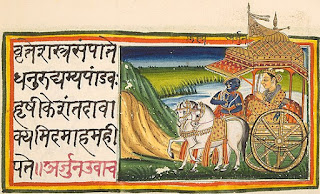
Prince Arjuna and his Charioteer Krishna
Here are some links to further whet your appetite for the Language and Literature of Yoga.

There are many more resources collected here in Kali's Kitchen.  Make yourself at home.

As one of the most important symbols of yoga, Om is a whole subject in and of itself.  As a starting point, you may like to read this Kali's Kitchen post on The Meaning of Om.

The Cambridge Introduction to Sanskrit is the best text I've seen on the subject and is the text used in the University of Alberta's Sanskrit courses.  You can find alphabet charts, sample chapters, practice sheets, and more here.

Here you can contemplate more of the Vedantic Nyayas or metaphors about illusion (maya) and reality, like the examples I gave of "The Rope and the Snake" (Rajjusarpa-Nyaya) and "Water off a Lotus Leaf" (Padmapatra-Nyaya).

And most importantly for your studies, here is a previous post with a full and detailed recap of my lecture.

Thank you for this opportunity!  Best wishes on your path!

Tuesday, 7 April 2020

Thank You Edmonton

Thank you all for being such caring, respectful community members and staying home as much as possible during this pandemic.

Here are a few resources in the Edmonton area to support your physical, mental, and emotional wellness during this challenging time.

Free Online Yoga Classes by Donation from Yoga Within

Free Online Pranayama and Meditation Classes from Sun Yoga

Free meals for people who need them from Ganesh Sweets

Online Music and Sound Therapy from local Musician and Music Therapist, Tiffany of  Sparrow Harmonix

Online Grief Support from local expert Sandy Ayre


Tuesday, 10 March 2020

Namaste, MacEwan Yogis and Yoginis

Devanagari writing of the Sanskrit Maha Mantra
Here is a link to a summary of my presentation on The Language and Literature of Yoga.

A couple of additional notes:

- The aspirated "th" sound in the word Hatha which we practiced pronouncing is listed with the cerebral consonants on the Sanskrit Alphabet chart because the tongue is placed at the roof of the mouth.  If you find that too difficult to pronounce, just remember that the "th" sounds more like a "t" with a puff of air than like the English words "this" or "think".

If you're interested in more in-depth study of the Sanskrit language, I recommend The Sanskrit Channel on YouTube as a starting point.


- Also, regarding the "Key Definitions of Yoga" given in my presentation and summary, be aware that these are not the only classical definitions of Yoga.  However, they are widely accepted as representative of key concepts in each of these works of literature and of the practice of yoga in general.  

- In case you would like to read the full verse from the Bhagavad Gita, it is found in Chapter 2, Verse 50.


Monday, 24 February 2020

Live Streaming Satsangs from Sivananda, Bahamas

Carved Om on the beach at the Sivananda Ashram, Bahamas


Hello Yogis and Yoginis!

Head's up!  The Sivananda Yoga Retreat in the Bahamas is now live-streaming their morning and evening satsangs (and even some of their workshops) on Facebook!

I know it's not the same as being there with the sun on your skin and sand between your toes, but I feel like it's the next best thing, like somehow we have been blessed with a siddhi to transcend time and space!  And in case you can't catch the events in real-time, please note that you can watch the recordings at your convenience.

I'd like to bring your attention in particular to this workshop with Krishna Das from last weekend's Yoga of Chant Retreat.  I found the questions very timely, and the answers are truly beautiful. 

The ashram cat also makes a special appearance at a particularly poignant moment that you won't want to miss. ЁЯШЙ  Forget Netflix for a night.  Watch this instead.  I think you'll be glad you did.

Sivananda Yoga Retreat, Workshop with Krishna Das, Saturday, February 22, 2020


Friday, 21 February 2020

Happy Mahashivaratri 2020!

Om Namah Shivaya
Tonight many yogis will be fasting, keeping vigil, meditating and chanting all night long in celebration of Lord Shiva, the Adiyogi, or "first yogi".

If you're in the Edmonton area, you can join celebrations at the Bhartiya Cultural Society starting at 6 pm.

If you'd rather participate from home, you can join Krishna Das  live online at the Sivananda Ashram Yoga Retreat, Bahamas' Facebook Page for the Mahashivaratri vigil starting at 8:45 pm tonight and continuing all night long!

Om Namah Shivaya!
Har Har Mahadev!
Jai Shiva Shambo!

Thursday, 6 February 2020

A $30 Gift for you from SPUD!

Origami Folded by Tara
I can't believe it's already February 2020!  I hope your new year has been filled with inner peace, self-love, radiant health and a crystal clear commitment to your resolutions.

This year, I resolved to practice ahimsa by minimizing my impact on the environment.  So far it's going very well!

One big aid in avoiding plastic packaging and supporting local businesses has been ordering products from SPUD.ca, Canada's most sustainable grocery delivery company.

How does it work?

It's easy!  SPUD curates the best in local, organic and sustainable groceries by working directly with farmers and producers.  All you have to do is sign up and start shopping.  There are no subscriptions or contracts.  Just order what you want, when you want.  Your order is packed in a sturdy reusable box and delivered right to your door.  Because they have no in-store displays, SPUD has the lowest food waste of any grocery chain in Canada!  That also means your order is always fresh and 100% satisfaction guaranteed.  SPUD's Blog has lots of green tips and recipes, and opportunities to help with worthy causes in your community. 

How do I get my $30 gift?

That's easy too!  During the month of February, pick out your first order of $75 in groceries from the vast selection of fresh and frozen foods, produce, meat, and even local craft breweries and apply my personal referral code below at the check-out. Voila, you get $30 off your order! 

What are my favorite items to order?

I love the $0.99 avocados and Que Pasa Tortilla Chips, which are always less expensive than my local grocery store.  The Traditional Hutterite Eggs are delicious and it's such a novelty to have the Italian Centre's famous house-made Pizza Dough delivered right to my door!  

Whatever you choose, Bon Appetit!

Referral Code:  CREDM-WOLTAC


Friday, 13 December 2019

OMG, Check out The Sanskrit Channel on YouTube

Namaste Yogis and Yoginis, I hope you and your yoga practice are thriving!

I'd like to bring your attention today to a priceless Sanskrit resource available on YouTube, The Sanskrit Channel.  This channel features a huge selection of Sankrit texts and mantras, all excellently chanted, transliterated and translated.


This particular video features all of the Bhagavad Gita quotes in the Hindi movie OMG Oh My God which is available on Netflix.  

Grab a bowl of popcorn and enjoy! 

Happy Sattvic Movie Saturday!


Monday, 28 October 2019

PAC 156, Fall 2019

Namaste, thank you for welcoming me into your class today!

Here is a review of the material we covered and some additional links you may find helpful.

Please feel free to share any questions or feedback you have with your instructor, or in the comments below.

First, a link to the Teacher/Student chant we began with.  The post includes a beautiful classical recording by the late Ravi Shankar.

And here is a full summary of today's guest lecture. 

It was a pleasure to meet you, best wishes on your yoga journey, Om Shanti, Shanti, Shantihi!


Saturday, 26 October 2019

Free Diwali Gift from Sadhguru


Diwali is the Indian "Festival of Light", conveying prayers and blessings for clarity, brilliance and illumination. 

To celebrate, Sadhguru, the founder of Isha Foundation is offering his online "Inner Engineering" course for free only until October 29

Click here to learn more and to register.

Friday, 13 September 2019

For the Love of Marigolds

Photo of Atul Dubey by Ken Hermann
You all know how much I love marigold flowers!

For that reason alone, Danish artist Ken Hermann might just be my new favorite photographer.

His series of Flower Men portraits shot in Kolkata on the banks of the Hooghly River is so spellbinding I had to share it with you.

This video really brings Ken's inspiration and the fascinating city of Kolkata to life.

Also, be sure to check out his series of portraits titled Holy Men.

Ok, I have to go make a marigold mala now, enjoy!

Saturday, 7 September 2019

A Day at an Ashram, Sun Yoga Edmonton

A reading from the Sivananda Upanishad
Have you ever wondered what it's like to spend a day at a Sivananda Yoga Ashram?

Would you enjoy an opportunity to revisit your own retreat experience close to home?

Here is your chance!

I have so many fond memories of my times at Sivananda Ashrams around the world and as a fellow student with Sylvie in the Advanced Raja Yoga and Bhagavad Gita classes in the Bahamas.

I'm really looking forward to attending this unique event.  I'd love to share the experience with you!

A DAY AT THE ASHRAM

Sunday, September 15, 2019, 9:00 am- 3:00 pm


Cost: $108 (Lunch, chai, and snacks are included)

THERE ARE ONLY 12 SPOTS for this unique workshop and it's ALMOST FULL!

Register Online to book your spot. It's only a week away!

This workshop is open to ALL LEVELS AND AGES. No prior yoga or meditation experience needed.

Friday, 6 September 2019

Namaste, 2019 Yoga Teacher Trainees at Yoga Within!

Marigolds, representing "Plasticity"
A heartfelt welcome to the new 2019/2020 class of Hatha Yoga Teacher Trainees at Yoga Within!

I wish you all the cheerfulness and flexibility you will need to navigate this lifelong journey of personal transformation.

I'm aware that in this age of prolific body-centered practice, studying the origin, history, and philosophy of yoga may seem a bit... extra.  

Yoga (or more precisely, the practice of yoga asanas) has become a global phenomenon and a multi-billion dollar industry.  Millions of people in Canada alone now participate in classes, workshops, and retreats.  Remarkably, the numbers keep growing.

While some think philosophy and history are irrelevant to yoga today or that philosophy is something "other people" think about, actually, There is no one who does not have a philosophy.  Learning about the origins and intentions of Classical Yoga can help us to identify and examine our own philosophy (and hypocrisy) in yoga and in life.

Knowing where the teachings come from, how they blended into modern culture, and how experts see them trending in the future can make you a more critical (I don't mean judgemental) and engaged student. It can also make you a more informed and professional Yoga Teacher.

Today's yoga teachers need to navigate issues of cultural and spiritual sensitivity.  They encounter students from many backgrounds and educational frameworks.  In order to address the wide range of physical, mental, emotional, spiritual and social issues students seek out yoga to address, it is essential to be aware of the "big picture".  Having as many tools in your box as possible allows you to excel when preparing and presenting yoga to individuals or groups and have a positive impact on your students and your community.

Many yoga teacher trainees are surprised to discover that this part of their education is not boring or dry.  It does not require a brilliant mind or running away to a cave.  Rather, it is a way to examine and articulate your own values and goals.  It allows you to engage with the purpose behind the practice.  It develops compassion and respect for the ideas and ideals of all Yogis and Yoginis, past, present, and future.

I hope to convey some of my enthusiasm and spark your curiosity about Yoga's original language, oral history, and works of world-literature as well as the fascinating cast of characters who have brought Yoga to Atha, or "this moment" which all of our previous experience, contemplation, education, and practice have prepared us for.

"And now the teaching on Yoga begins." P.Y.S. 1.1

Namaste,
Tara