Showing posts with label patanjali. Show all posts

Wednesday, 2 February 2022

Grant MacEwan, The Language and Literature of Yoga

Namaste ЁЯЩП 

There is a saying in Sanskrit, the original language of Yoga that in any learning environment:

We learn 25% from our teachers, 25% from our peers, 25% we figure out ourselves and 25% we learn over time. 

That said, in addition to following along with this post in today’s class, I invite you to return and review the material and links, contemplate their relevance in your life and practice, and discuss them with your classmates. 

Rest assured, not all of it was meaningful to me from the beginning, and there is always more to learn, so if some of this feels like more than you’re ready for, that’s ok, you have a lifetime to practice.

I have included several questions for your consideration. Please feel free to voice your answers or further questions for discussion during class.


The Language and Literature of Yoga


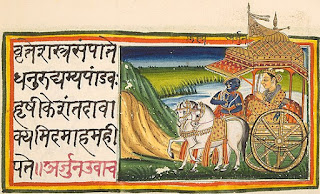
Sanskrit is the primary classical language of India, and the original language of Yoga which is considered to be one of the six classical schools of Indian Philosophy, and includes the posture practice with which we are familiar.

The word Sanskrit means "perfected" or "refined" and has a rich tradition of creative, scientific, philosophical and religious texts. 

Although it is no longer widely spoken on a daily basis, it is still very much in use as a ceremonial language.

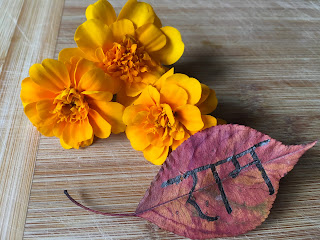
The beautiful script is known as Devanagari, or the "vehicle of the gods". 

The Cambridge Introduction to Sanskrit  is the best introductory text I have come across and is recommended for use in the Sanskrit classes at the University of Alberta. Click in the link and go to “Other Resources “ to find free alphabet charts, videos, worksheets and more.

Yoga Sutras in Devanagari and Transliterated Sanskrit from the Arlington Centre is a free PDF of the full Yoga Sutras of Patanjali with the diacritical marks. I’m not necessarily saying this is the “best” translation, but I do find the format and language approachable and helpful for beginners.

Q. Does language matter? Do names matter? What are some of the challenges and benefits of studying Yoga with or in the original language?


Transliteration Vs. Translation


Transliteration is transposing the sounds of one language into the script of another.  The use of standardized diacritical marks allows for accurate representation of sounds unique to a language.

Q. What challenges may a student encounter during the transliteration phase?

Translation is converting the words of one language into the words of another to facilitate understanding of the meaning of words or phrases. 

Q. What challenges may a student encounter during the translation phase?

Sanskrit in Modern English

English is a member of the Indo-European language family, one of several descendants of Sanskrit.

Many non-yoga specific words in English (jungle, bandana, pyjama, suture, jugular etc.) are borrowed or derived from Sanskrit. 

Many Sanskrit terms specific to yoga are becoming well known in English through the names of postures, authors, teachers and gurus.  Because their meanings may become lost in translation, often the original words are simply adopted into our modern language.

Here is an extensive and perhaps surprising list of English words of Sanskrit origin.

Q. What’s your favourite English word borrowed or derived from Sanskrit ?


Hints for Pronouncing Sanskrit Words and Names


Here are a few basic tips for pronouncing unfamiliar Sanskrit vocabulary, places and names:

- unlike English, Sanskrit is a phonetic language, meaning each and every letter is pronounced and always in the same way.

- transliterated letter "a" is pronounced "uh” as in "around" rather than "a" as in "after" or “Canada”

- each consonant is followed by a short “a” sound unless modified by other vowels. Letters do not have names in Sanskrit, they are known by their sounds.

- knowing where in the mouth the sound is produced will help you understand how to produce the sound

- there is a distinct and unfamiliar difference for English speakers between unaspirated and aspirated consonants ("b" vs. "bh" etc.)

- Sanskrit has no "th" sound, as in English “think" or "th" as in "this".  Rather the “th” in transliterated words indicates an aspirated consonant. For example, the word "Hatha"is pronounced "ha-tha" (“t" with a puff of air) rather than the common English mispronunciation of "Ha" (as in hat) "tha" (as in thug). Note* there are two such sounds which may seem similar to your ear but are actually produced in different areas of the mouth.

- longer words and names are often compounds of shorter words, so try breaking them down into syllables.

Here is a more extensive pronunciation guide should you wish to explore this matter further.

Q. What difficulties may arise when words or names are mispronounced?

Q.  What are some benefits of speaking more than one language?

Foundational Literature

Foundational texts are works of world literature which achieve a certain status for their presentation of ideas as representative of a culture or philosophy. 

Philology is the study of literary texts, their meaning, authenticity and historical context.


The Foundational Texts of Yoga
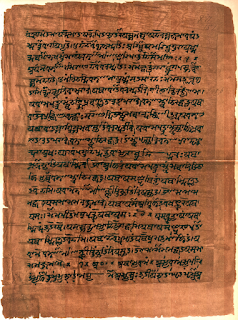

The Vedas

Meaning "wisdom" or "knowledge", the Vedas are traditionally said to be the revelations of sages during deep meditation, carefully preserved and considered to be the roots of Indian philosophy.

They are among the oldest sacred texts in the world, written approximately 1700-1100 BCE.

They were transmitted by oral tradition alone until around 1000 CE. They emphasize formal ritual and rites of passage like marriage, birth and death. 

They also introduce dana (compassion), karma (action and reaction), sacred dance and Ayurveda (sister sciences of yoga).

The Upanishads

Upanishad means “to sit at the feet” [of a Guru].

There were approximately 200 Upanishads written between 1000 BCE and 1500 CE including sections on philosophical theory and the practice of virtues like satya and ahimsa later also elucidated in the Yoga Sutras of Patanjali.

Topics include consciousnessbrahman, atman and maya, or the Source, the Self and the illusion that keeps us from seeing them as the same. It also proposes multiple etymological possibilities for Bija or “seed” mantra Om (Aum)

Of the great statements or mahavakyas of the Upanishads is Aham Brahmasmi, or loosely translated, "The Self and the Divine are one and the same." A similar sentiment can be said to be encapsulated in the sound symbol Om.


Arjuna and Krishna, the main characters in the Bhagavad Gita

The Bhagavad Gita

Written approximately 400 BCE, this text is just one chapter of an epic poem called  The Mahabharata.

It is one of the most heavily translated texts in the world. It highlights themes of  Dharma(duty and heroism), Yoga (and the paths of yoga, KarmaJnana and Bhakti), Moksha or liberation from suffering and the cycles of suffering on the “battlefields" of life.


One key definition of yoga in this text is:

Yoga karmasu kaushalam (Yoga is skill in action.) found in Chapter 2 verse 50.
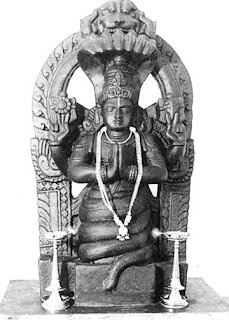

The Yoga Sutras of Patanjali

Also known as the Patanjala Yoga Shastra, written approximately 1600 years ago, (perhaps as late as 325-425 CE suggests recent research by Dr. Philipp Maas), Patanjali was the first to codify the teachings of yoga into a written format known as Sutras. Ideally these terse aphorisms are studied in the original language along with the first commentary called the Yoga Bashya.

Yoga Studies Podcast, Philipp Maas

Yoga Sutra Chant, The Sanskrit Channel

One of Patanjali’s key definitions of yoga is stated in the second line of the first chapter:

Yogaschittavrittinirodhah (Yoga is the stopping of the disturbed waves of the mind.)

In the second chapter, the author famously outlines a strategic "eight-limbed" path of practice which moves from external practices (yamas, niyamas, asana, pranayama, pratyahara) to internal experiences (dharana, dhyana, and samadhi). The path is known as Ashtanga or Raja Yoga. This practice is widely regarded as central to modern Hatha Yoga.

The sound symbol Om is mentioned in chapter 1, sutras 27-28 as the energy of manifestation which should be chanted repeatedly (japa) to encourage introspection and remove obstacles to the state of samadhi.

Q. How do these “definitions” compare/contrast with the modern interpretation of yoga in Canada?

Q. Is reading these texts in their original language necessary to achieve the goal of yoga?

Please note* This is by no means a full list of the foundational texts of yoga! It is only the tip of the tip of the iceberg! Please do explore further.

Krishna playing his flute


Mantras, Stories and Songs

Traditionally, Yoga was an oral tradition, passed from person to person keeping the teachings both alive and lively.

Singing, chanting, poetry and recitation, in fact all forms of sound, speech and writing are venerated in yoga philosophy. Personified as a beautiful Goddess, language is seen as a muse for creativity.

Storytelling is used widely as a teaching tool for students of all ages.

Music and sacred sound are central to the theory-practice continuum. They attract the attention, help maintain focus, reset dissonant physical and mental vibrations and uplift the environment.

Q. How can some knowledge of Sanskrit enhance my experience of yoga?


In Conclusion

I hope that I have passed on to you some of the reverence and enthusiasm I feel for the Language and Literature of Yoga, as well as points for reflection and some resources with which to follow up on your curiosity. 

Thank you for your time and attention today. Namaste!


Monday, 28 October 2019

PAC 156, Fall 2019

Namaste, thank you for welcoming me into your class today!

Here is a review of the material we covered and some additional links you may find helpful.

Please feel free to share any questions or feedback you have with your instructor, or in the comments below.

First, a link to the Teacher/Student chant we began with.  The post includes a beautiful classical recording by the late Ravi Shankar.

And here is a full summary of today's guest lecture. 

It was a pleasure to meet you, best wishes on your yoga journey, Om Shanti, Shanti, Shantihi!


Monday, 25 February 2019

PAC 156, Language and Literature of Yoga

Sanskrit Manuscript in Devanagari: Image Source
Namaste, thank you for the opportunity to join your class today!

Here are some notes and links you may find helpful.

The Language and Literature of Yoga

Kali's Kitchen, Sanskrit Page

Sanskrit is the primary classical language of India and the source language of Yoga.

The word Sanskrit means "perfected" or "refined" and has a rich tradition of creative, scientific, philosophical and religious literature.

Although it is no longer widely spoken on a daily basis, it is used as a ceremonial language and is present (at least sporadically) in the vocabulary of most modern yoga practices.

The beautiful script pictured above is known as Devanagari.

Transliteration vs. Translation

Transliteration
is the transposing of sounds in one language into the script of another.  The use of standardized diacritical marks allows for the accurate representation of sounds unique to a language.

When using Sanskrit terms diacritical marks are necessary to indicate sounds which do not exist in English.  Unfortunately, they are inconsistently used in modern Yoga books and websites which can make pronouncing Sanskrit words difficult.

Translation is the act of converting the words of one language into the words of another to facilitate the comprehension of meaning.

In yoga, the original Sanskrit terms are often so nuanced, that it takes multiple words, sentences or even paragraphs in other languages to convey their connotation and intention.

Image Source: The Ten Avatars of Vishnu
Sanskrit in Modern English

English is a member of the Indo-European language family, one of several descendants of Sanskrit.

Many common words in English (jungle, pajama, avatar, suture, bandana, shampoo, cashmere, ganja, jugular etc.) are derived from Sanskrit.

Many Sanskrit terms specific to yoga are familiar to modern yogis in their original language through the names of postures, authors, and texts.

Because their meanings can be obscured in translation, the original terms (asana, ashram, guru, swami, karma, mantra, mandala etc.) have been adopted.

Hints for Pronouncing Sanskrit Words and Names

Here are a few basic tips for reading and pronouncing Sanskrit:

- Sanskrit is a phonetic language.  There are no silent letters, and each letter makes just one sound.

- The transliterated letter "a" is pronounced like "up" rather than "at".  If there is a horizontal line above the "a" (─Б) it indicates a long "aa" sound. In the example, Saс╣Гs─Бra, we see two short and one long vowel.

- There is a short "a" sound following each consonant unless modified by other vowel sounds as in the word yoga.

- Sanskrit features unaspirated and aspirated consonants ("b" vs. "bh" and "t" vs. "th" etc.).

- Sanskrit has no voiceless or voiced digraph "th" sound, as in "think" or "this".  Therefore the word "Hatha" (haс╣нha) is pronounced: "Ha-tha" ("hu" similar to "hut" + "tah" similar to "Utah", "t" with aspiration) as opposed to the common mispronunciation, "Ha" (as in hat) "tha" (as in thug).

- Transliterated "c" will always sound like English "ch" as in "church".  This "ch" sound may also be aspirated, sometimes indicated with an extra "c" or followed by "h".

- Sanskrit contains retroflex consonants produced with the tongue curled to the roof of the mouth.  Such sounds are absent in English and present a challenge for native English speakers.

- Long words are frequently compounds of two or more short words.  Knowing some words that appear frequently in yoga vocabularies such as asana meaning "posture", pada meaning foot", ardha meaning half and ananda meaning "bliss" will make it easier to understand and articulate longer words and names.

Image Source
Foundational Literature

Foundational texts are works of world literature which achieve an authoritative status for their presentation of ideas representative of a culture or philosophy.

Following are a few of the foundational texts of yoga.  There are others specific to the various paths of yoga, like Hatha Yoga, so please consider this short list to be an introduction.

The Foundational Texts of Yoga

The Vedas and Vedangas

Meaning "wisdom" or "knowledge", the Vedas are widely considered authoritative as representing the roots of Indian philosophy.  They are among the oldest sacred texts in the world, written approximately 1700-1100 BCE.

They were transmitted by oral tradition alone until around 1000 CE, and emphasized formal ritual and rites of passage like marriage, birth, and death.  They include peace prayers still chanted in yoga classes and ashrams today, and propitiations for promoting harmony and avoiding suffering.

The Vedangas are auxiliary Vedic disciplines including ritual instruction, astrology, linguistics, phonetics, and mudras important for maintaining the accuracy and aesthetics of oral recitation.

Teachings from the Upanishads: Image Source
The Upanishads

Upanishad means “to sit at the feet” (of a guru).

There were approximately 200 Upanishads written between 1000 BCE and 1500 CE including stories, philosophical theory, ethics and virtues like satya and ahimsa.

Major themes include consciousnessbrahman, atman and maya, or the Source, the Self and the cosmic illusion that keeps us from seeing them as the same.

Of several "great statements" or mahavakyas , the one mentioned in class today was:

Aham Brahmasmi, loosely translated, "I and the Source are one and the same."

The Pavamana Mantra which we chanted at the end of class,  also featured in the song Navras in The Matrix Revolutions comes from the Brihadaranyaka Upanishad.


Arjuna and Krishna in the Bhagavad Gita: Image Source
The Bhagavad Gita

Written approximately 400 BCE, this text is one chapter of an epic poem called  The Mahabharata, which I affectionately refer to as "the original soap opera".

It highlights themes like Dharma (social duty and heroism), Yoga ("union" and the paths or practices that lead to the state of "unity", KarmaJnana, and Bhakti), and Moksha or liberation from suffering experienced on the "battlefield" of life.

Yoga and the attributes of one who practices yoga are described many times in the Gita.  

For the sake of simplicity, the key definition of yoga I have chosen to highlight from this text is:

Yoga karmasu kaushalam (Yoga is skillful action.) found in Chapter 2 verse 50.

Patanjali, Author of the Sutras: Image Source
The Yoga Sutras of Patanjali

Written nearly 1600 years ago, Patanjali was the first to codify the teachings of yoga into a written format known as Sutras.

New evidence shows that the first and most authoritative commentary on The Yoga Sutras known as the Yoga Bhashya was likely written by Patanjali himself.  See 2016, New Light on Patanjali, in which Dominik Wujastyk, and Thomas Maas assert that the two works should more accurately be referred to together as the Patanjalayogashastra.

Patanjali's key definition of yoga is stated in the second line of the first chapter (PYS 1.2):

Yogaschittavrittinirodhah or "Yoga is the state in which the disturbed waves of the mind have been stopped."

In the second chapter, Patanjali outlines an "eight-limbed" path of practice to stop the disturbed mental waves, including external strategies (yama, niyama, asana, pranayama, pratyahara) and internal meditative experiences (dharana, dhyana, and samadhi).  This prescription is well known in modern yoga as Ashtanga or Raja Yoga.

Stories and Songs, Enhancing the Practice and Presentation of Yoga

Yoga was originally an oral tradition, passed live from person to person.  This method effectively kept the teachings dynamic and engaging for centuries.  Eventually, the teachings were preserved in a written form, but the living tradition or parampara is as important today as ever.

As such, art, dance, music and storytelling are widely employed as teaching tools for students of all ages.  Chanting, singing and other forms of sacred sound are employed to attract attention, maintain focus, reset dissonant physical and mental vibrations and uplift the individual and the environment.

You can enhance your own enjoyment of yoga, and in teaching make your lessons more motivating and memorable through the use of instruments and other artistic expressions.

In Conclusion

Both the language and literature of yoga are accessible and relevant to the modern practitioner with a little effort and an open mind.

Modern yogis can access original manuscripts, translations, and commentaries as well as classes and videos on the foundational texts of yoga to gain knowledge and awareness of the roots, history, and practices of traditional yoga as well as yoga today.

Many source materials are available for free at Internet Archive.

Additional resources at the University of Alberta:

Yoga is an interdisciplinary study at the University of Alberta.

You can register for classes which examine the history, philosophy, religion, and language of yoga in various departments.  For more information contact South Asian Studies.

Trailer for Neil Dalal's film, "Gurukulam"


Tuesday, 4 December 2018

Thank You, MacEwan University

Om Symbol at the Sivananda Yoga Retreat, Bahamas
Namaste,

Here are a few links, charts and tips to support today's guest lecture on The Language and Literature of Yoga.  

Feel free to browse around Kali's Kitchen.  It's a cozy place to explore the paths of Yoga and allow your own realizations, musings, and practice to "cook".

Enjoy!

We began today's class with the chant Om Sahana Vavatu in the call-and-response style of a traditional ashram or gurukulam.


The main topics introduced were:

The Language of Yoga:

The Foundational Literature of Yoga:

The Vedas
The Upanishads
The Mahabharata including the famous chapter The Bhagavad Gita
The Yoga Sutras of Patanjali

*Although we didn't discuss it in class, I also recommend the highly influential 15th-century text The Hatha Yoga Pradipika for a deeper understanding of the foundations of the path of Hatha Yoga specifically.


Key Definitions of Yoga:

The Vedas and the Upanishads: Aham Brahmasmi or "The microcosm (individual self) and the macrocosm (universal Self) are one and the same."

The Bhagavad Gita: Yoga karmasu kaushalam or "Yoga is skill in action"

The Yoga Sutras of Patanjali:  PYS 1.2 Yogash chitta vritti nirodhah or "Yoga is the stopping of the fluctuations of consciousness/the stilling of the mind."


Note* If you are in need of source materials for papers or your own personal study, I highly recommend archive.org, a non-profit digital library of millions of scanned documents and texts.

Final Chant:  Asato Ma Sadgamaya


Best wishes in your studies.  May your learning be brilliant and may it bring peace of mind, peace in the world and peace in your life.

Om Shanti,
Tara


Wednesday, 14 March 2018

Summary, PAC 156 Guest Lecture

Hanuman, by Betsy Schott
Namaste University of Alberta, PAC 156!

Thank you for inviting me to your class on Monday to present a brief "Introduction to the Language and Literature of Yoga".

In addition to this post from 2016 which I mentioned in class, you may like to check out this post from my lecture in 2015 which includes links to both of the chants we sang, a little bit about how yoga became popular in the west, and further explanations of the main paths of yoga.

If you have time, also check out this recording and transcription of Swami Satchidananda at Woodstock!

And to elaborate on the example I gave in class, of how the theory of yoga can enhance your practice, take a look at this new post about Hanuman and the asana that mimics his great leap to Lanka.

In summary, Yoga offers a whole tapestry of methods to enhance physical, mental, and spiritual well-being.

Aside from the well recognised physical benefits of Hatha Yoga, the Sanskrit language and foundational literature of yoga present numerous threads of insight into how we can live peacefully in a stressful world by developing our strength, flexibility, and resilience.

Songs, stories, myths and legends engage us in the lively timelessness of the oral tradition, and yoga's theory/practice continuum.

I encourage you to stay curious in your yoga practice.  You never know what will resonate with you until you experience it. 

As they say in India, "Sab kuch milega!", "Everything is possible!".

Om Shanti,
Tara


Sunday, 12 March 2017

Stories of King Janaka: Saving Attention

Narada bows to Vishnu, Image Source
According to the Yoga Sutras of Patanjali, the goal and practice of Yoga both have to do with Chitta Vritti Nirodh, or stopping the waves of the mind.

This is accomplished through an eight-fold set of practices known as Ashtanga Yoga.

In Patanjali's Ashtanga Yoga, withdrawal of the senses (pratyahara) facilitates concentration (dharana) which leads to meditation (dhyana) which in turn leads to oneness (samadhi).

Narada Muni is a joyful, mischievous storyteller who wanders the worlds sharing news and wisdom.

Here is a story of King Janaka's visit from Narada Muni:

“You know King Janaka was called ‘Vidheha’ (means also ‘dead’ or ‘liberated from the body’)

Great sage Narada asked him one day, 
‘ Revered Sir, how are you called as Vidheha, you live in this world, how can you be a Vidheha?’ 
Raja Janaka said,’this is very simple. I will tell you about it in the evening. 
Now, please do this little job for me. There is milk in this bowl. You take this bowl & come along with me. Please see that not a single drop of milk is spilled on the Earth. 
Then only I will tell you why I am called Vidheha’. 

Narada took the bowl & followed Janaka everywhere. He had to be very careful because the bowl was such that by the slightest movement the milk might have spilled. He got very tired. 
When they returned in the evening, Narada asked ‘Please tell me now, 
I am quite fed up with carrying this bowl & following you everywhere at the same time.`

Raja Janaka said, `First of all tell me what you have seen?’
Narada, `Nothing except this bowl of milk so that it won’t spill.`
Raja Janaka, “Didn’t you see, there was a big procession in my honour, then there was a court wherein, there was programme of dancing? Didn’t you see anything?
Narada said, “No sir, I have not seen anything”.

Raja Janaka, `My child, likewise with Me, I also see nothing. 
All the time, I just watch my attention. Where is it going? 
Making sure that it won’t spill away like the milk.`

“This sort of attention one has to develop: chitta nirod’.  
Nirod means the saving of your attention, so your attention should not be on saving money & worldly things and all that, but attention itself must be saved. 
As you watch your money, as you watch your road when you drive, as you watch your child, when it is growing, as you watch the beauty of your wife, or the care of your husband, 
all put together you watch your Self – your attention. 
(Shri Mataji)


Thursday, 2 June 2016

University of Alberta, PAC 156 Guest Lecture

Mahamantra written in Devanagari
This is a special post for the students of the University of Alberta PAC 156 class.

Welcome to Kali's Kitchen!

Thanks for having me in last Thursday to guest lecture on the Language and Literature of Yoga!

I hope you find these reminders and resources helpful in your studies, it was a joy meeting you!

The Language and Literature of Yoga

Sanskrit is the primary classical language of India, and the original language of Yoga.

The word Sanskrit means "perfected" or "refined" and has a rich tradition of creative, scientific, philosophical and religious texts.

Although it is no longer widely spoken on a daily basis, it is still used as a ceremonial language.

The beautiful script (pictured above) is known as Devanagari, or the "vehicle of the gods".

You can see and hear the individual letters pronounced here.
You can find a short glossary of 108 yoga terms defined here.

Transliteration Vs. Translation

Transliteration is transposing the sounds of one language into the script of another.  The use of standardized diacritical marks allows for accurate representation of sounds unique to a language.

Translation is converting the words of one language into the words of another to facilitate understanding of the meaning of words or phrases.

Sanskrit in Modern English

English is a member of the Indo-European language family, one of several great (great great...) granddaughters of Sanskrit.

Many words in English (jungle, pyjama, suture, jugular etc.) are borrowed or derived from Sanskrit.

Many Sanskrit terms specific to yoga are becoming well known in English through the names of postures, authors, teachers and gurus.  Because their meanings may become lost in translation, more and more often the original words are simply being adopted into our modern language.

Here is a list of English words of Sanskrit origin.

Hints for Pronouncing Sanskrit Words and Names

Here are a few tips for wrapping your tongue around long unfamiliar terms:

- transliterated letter "a" is pronounced "a" as in "around" rather than "a" as in "after"

- there is a short "a" sound behind each consonant unless modified by other vowels

- recognize the difference between unaspirated and aspirated consonants ("b" vs. "bh" etc.)

- Sanskrit has no "th" sound, as in "think" or "th" as in "this".  Therefore the word "Hatha"is pronounced "ha-tha" (aspirated "t" with a puff of air) rather than the common mispronunciation of "Ha" (as in hat) "tha" (as in thug).

- longer words are often compounds of shorter words, try breaking them down.

Here is a helpful guide which reiterates the tips above plus several we didn't have time for.

Foundational Literature

Foundational texts are works of world literature which achieve a certain status for their presentation of ideas representative of a culture or philosophy.

The Foundational Texts of Yoga

The Vedas

Meaning "wisdom" or "knowledge", the Vedas are the revelations of sages during deep meditation carefully preserved and considered to be the roots of Indian philosophy.

They are among the oldest sacred texts in the world, written approximately 1700-1100 BCE.

They were transmitted by oral tradition alone until around 1000 CE and emphasize formal ritual and rites of passage like marriage, birth and death.

They also introduce dana (compassion), karma (action and reaction), sacred dance and Ayurveda (sister sciences of yoga).

The Upanishads

Upanishad means “to sit at the feet” [of a guru]).

There were approximately 200 Upanishads written between 1000 BCE and 1500 CE including sections on philosophical theory and the practice of virtues like satya and ahimsa later elucidated in the Yoga Sutras of Patanjali.

The main topics include consciousnessbrahman, atman and maya, or the Source, the Self and the illusion that keeps us from seeing them as the same.

Of the great statements or mahavakyas, in our class we focused on Aham Brahmasmi, or loosely translated, "The Self and the Divine are one and the same."

Arjuna and Krishna, the main characters in the Bhagavad Gita
The Bhagavad Gita

Written approximately 400 BCE, this text is just one chapter of an epic poem called  The Mahahtarata, which I affectionately refer to as "the original soap opera".

It highlights themes like Dharma (duty and heroism), Yoga (and the paths of yoga, Karma, Jnana and Bhakti), and Moksha or liberation from suffering and the cycles of suffering or the "battlefields" of life.

The key definition of yoga in this text is:

Yoga karmasu kaushalam (Yoga is skill in action.) found in Chapter 2 verse 50.

The Yoga Sutras of Patanjali

Written approximately 2000 years ago, 200 BCE – 200 CE, Patanjali was the first to codify the teachings of yoga into a written format known as Sutras.

Patanjali's key definition of yoga is in the second line of the first chapter:

Yogaschittavrittinirodhah (Yoga is the stopping of the disturbed waves of the mind.)

He also outlines a strategic "eight-limbed" path of practice which moves from external practices (yamas, niyamas, asana, pranayama, pratyahara) to internal experiences (dharana, dhyana, and samadhi) known as Ashtanga or Raja Yoga.
Krishna playing his flute

Stories and Songs, Enhancing the Practice and Presentation of Yoga

Yoga is an oral tradition, traditionally passed from person to person.  This method keeps the teachings both alive and lively.

Storytelling is used widely as a teaching tool for students of all ages.

Music and sacred sound are often employed to attract the attention, maintain focus, reset dissonant physical and mental vibrations and uplift the environment.

You can enhance your own enjoyment of yoga, and in teaching make your lessons more motivating and memorable through the use of instruments and voice.

You can read more about my Shruti Box here.

In Conclusion

I hope that I have passed on to you some of the reverence and enthusiasm I feel for the roots and traditions of yoga.

Each person is unique, and different approaches are suitable for different students.  I wish you a lifetime of curiosity and exploration into the techniques of yoga that appeal most to you.

Please post your questions and comments, your feedback is precious.

Namaste!